Software Review Methodology at PulseTools: Our Process
⚡ In short
Software review methodology: the five checks every review passes, how the 0-10 score is built, and how corrections are handled, written from published research.
The software review methodology on this page exists so that a reader can check how an opinion was formed. Every review published by PulseTools in 2026 is produced the same way: a fixed rubric, public sources only, a dated record of what was read, and a corrections policy that leaves the original publish date in place. No vendor sees a review before it is published, and no review is written for one.
Software review methodology: the five checks #
Each review walks the same five checks in the same order, and each check reads only public sources: the vendor's pricing page, documentation, repository and published terms. The result is a review whose claims can be verified by opening the same pages, which is the whole point of a fixed method.
1. Pricing #
Published tiers are read from the vendor's own pricing page, not from a reseller or a cached screenshot. If a plan cannot be confirmed publicly, the review says so instead of guessing.
2. Documentation #
The official documentation is the source for what a feature does. Marketing pages are treated as claims, not facts, and the review notes where the two disagree.
3. Data portability #
Every review documents the export options: whether work can leave in a portable format and what happens to it when an account is closed.
4. Maintenance #
Release notes, public repositories and changelogs are checked for signs of ongoing work. A tool that has not shipped anything noticeable in months is described as such.
5. Limits #
Rate limits, usage caps and licence restrictions are recorded from the vendor's own terms, because those are the details that change a buying decision after the trial.
How the 0-10 score is built #
The score is not a vibe. It is a weighted sum over the rubric: feature depth, pricing clarity, documentation quality, export options and evidence of maintenance. Because the weights are fixed across the corpus, two scores mean the same thing, and a correction to one section moves the score by a known amount. Support pages on this site - the hubs, comparisons and guides - carry no score at all, so a score always refers to a single reviewed tool.
What this site does not do #
Honest limits matter more than a longer claims list, so they are stated here:
- No hands-on benchmarking. Reviews are research-based; nothing here times a workflow or load-tests a service, and no page claims otherwise.
- No affiliate links. There is no affiliate programme on this site, so no review earns a commission and no tool can buy placement.
- No vendor preview. Vendors do not see a review before publication and cannot pay to change a score.
- No invented experience. Where a review says a feature exists, the source is linked; where it says a limit applies, the terms are cited.
Corrections and updates policy #
When a tool changes - a new pricing tier, a removed feature, a licence change - the affected review is updated and the correction is dated on the page itself, while the original publish date is kept so the history stays readable. A correction that changes a score says so explicitly. Readers can report an error through the contact page; anything that changes a fact is fixed within a few days, and anything that changes a score is re-run through the rubric first.
Editorial standards #
Every article carries an author line and a publish date. Reviews follow one structure so they can be compared against each other, and the editorial standards for that structure live in the writer's checklist rather than in any individual author's habits. The same standards apply to the free tools this site publishes: each one documents what it does with your data before you use it.
Sources #
The method above is built on public documentation and stable standards:
- v0 by Vercel - official site and pricing (v0.dev)
- Cursor - official site and pricing (cursor.com)
- Bolt.new - official site and pricing (bolt.new)
- Google Search Central
- Schema.org
Frequently asked questions #
Are the reviews on this site independent? #
Yes. No affiliate links exist, no vendor previews a review before publication, and the score comes from a fixed rubric rather than from any commercial relationship.
Why does the site not benchmark tools in a lab? #
Benchmarks need the exact hardware, data and workflow a reader uses to be meaningful, and this site's reviews are read by people with very different setups. Published, checkable research is the honest scope here.
How are scores kept comparable across tools? #
The same rubric and the same weights are used for every tool, and support pages carry no score at all, so any two scores on this site were produced the same way.
What happens when a review is wrong? #
The corrections policy above applies: the fact is fixed, the correction is dated on the article, and the original publish date stays in place so readers can see the history.
Where to go next #
- All tool reviews - the complete index
- What's new on this site
- Every free micro-tool
More Tools Worth Reading
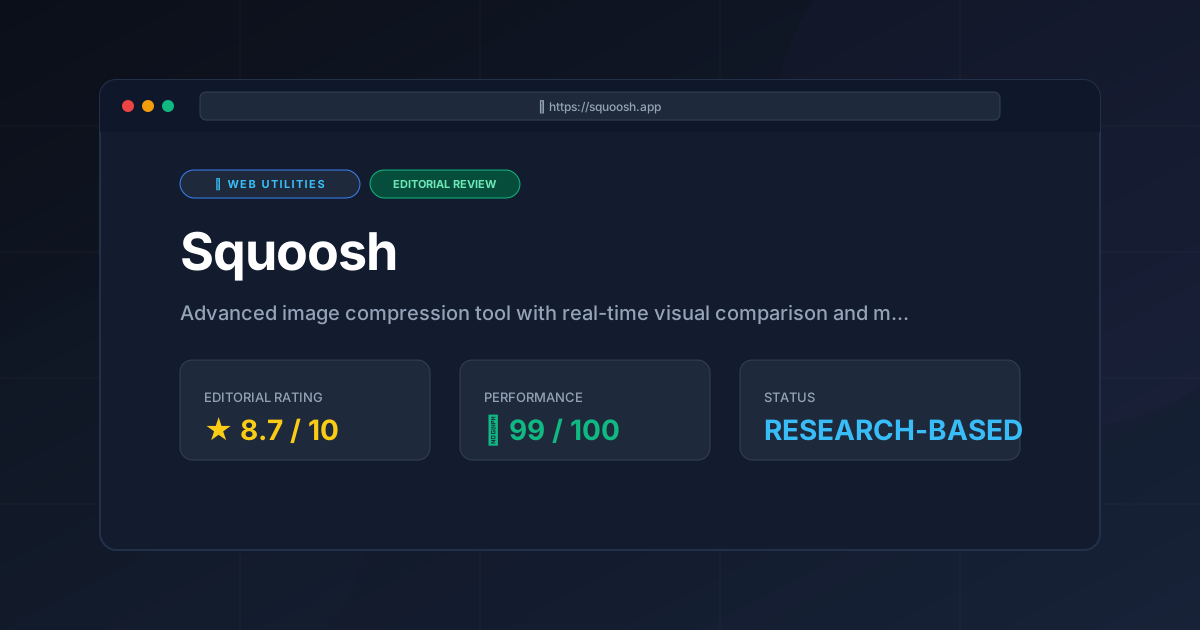
Squoosh
Web UtilitiesImage compressor Squoosh reviewed for 2026. Learn how to optimize WebP and AVIF files locally in your browser to boost site speed and UX.
Micro SaaS Statistics: 30 Tools Analysed
Web UtilitiesMicro saas statistics 2026: original data from 30 tool reviews - ratings, pricing models, category spread and review depth, written from published res...
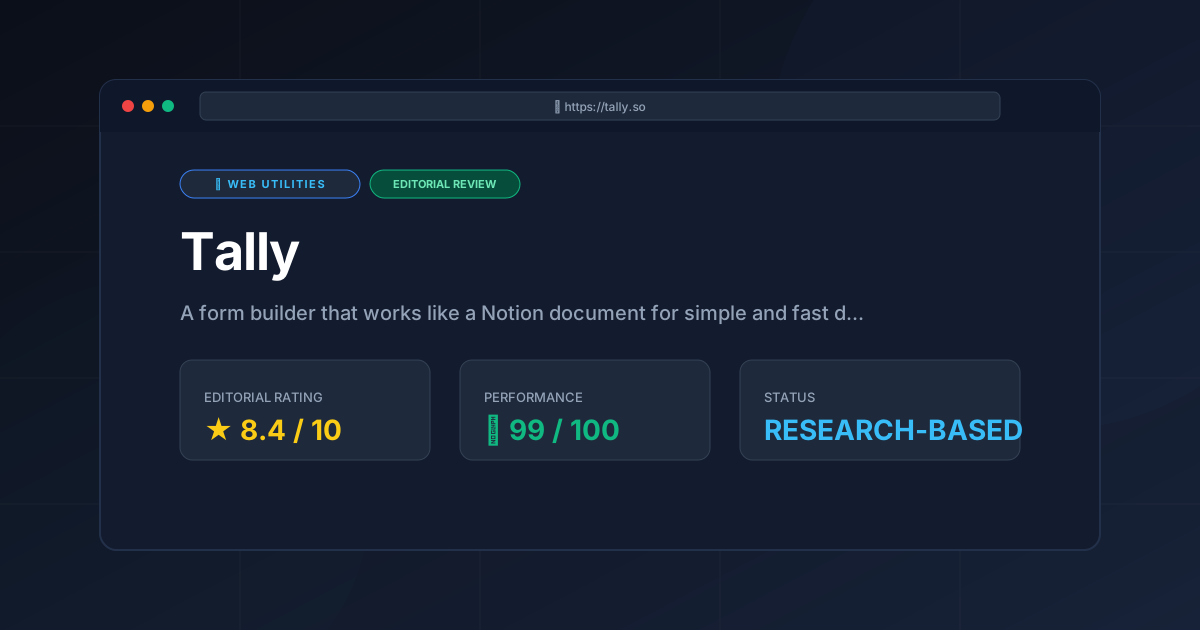
Tally
Web UtilitiesSimple form builder Tally reviewed. Discover if its Notion-style editor and generous free tier make it the best data collection tool for your business...